
ScanVeer Blog
Food Health Scanner App: The 2026 Guide to Unbiased Scores
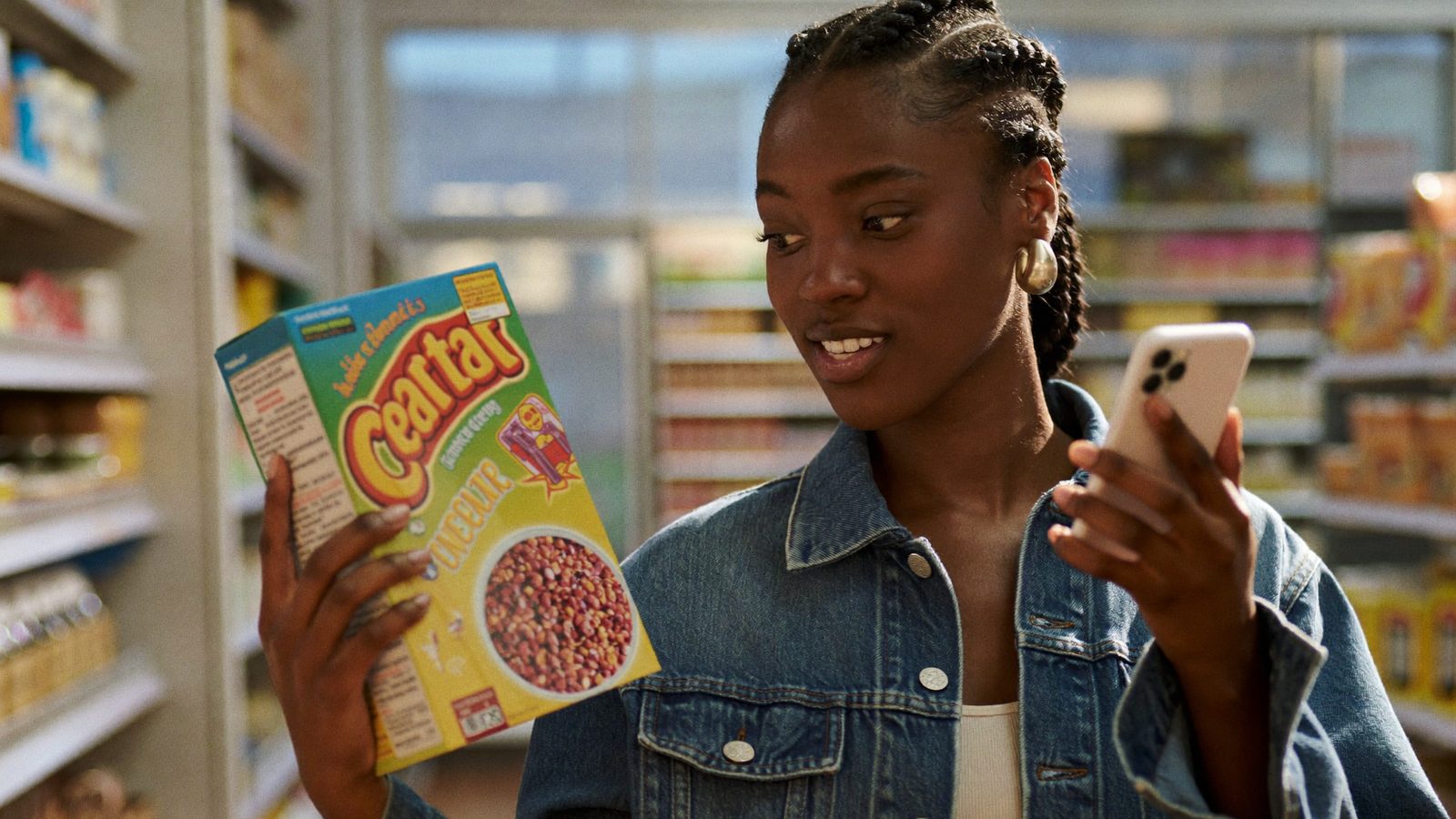
A food health scanner app reads a product's barcode and instantly rates how healthy it is — typically on a 0-100 scale — by analyzing its nutrients, additives, and degree of processing. It replaces minutes of label decoding with one gesture, helping shoppers spot hidden sugars, risky additives, and ultra-processed formulations before buying.
Key takeaways
- A food health scanner app converts a barcode scan into an instant ingredient analysis and health score, replacing minutes of label-reading with seconds of evidence.
- Some scanner apps run on brand partnerships or paid placement, business models that can quietly distort the scores you rely on — independence is the single most important feature to check.
- A trustworthy 0-100 health score should weigh nutrient quality, additives, degree of processing, and evidence strength — and publish exactly how those factors are combined.
- The best scanners now cover cosmetics and supplements as well as food, because ingredient risk doesn't stop at the pantry.
- ScanVeer is fully independent, scores food, cosmetics, and supplements on a transparent 0-100 scale, and suggests better-rated swaps for free.
In this article
Why 2026 Is the Year You Need a Scanner app
Supermarkets stock more products than ever, shoppers decide in seconds, and front-of-pack marketing has never been more aggressive — "high protein," "no added sugar," and "all natural" claims routinely sit on products a careful ingredient analysis would flag immediately. Meanwhile, ultra-processed foods now account for a large share of calories consumed in many Western countries, and the Harvard T.H. Chan School of Public Health's Nutrition Source links the formulations that dominate them — refined starches, added sugars, industrial fats, and cosmetic additives — to real health risks.
Reading every label yourself is practically hopeless: decoding one ingredient list means recognizing dozens of E-numbers and spotting sugar under its many aliases, then weighing it all against your own goals. A scanner app collapses that workload into one gesture — point your camera at a barcode, get a verdict grounded in nutritional science. In 2026, the question is no longer whether to use one. It's which one you can actually trust.
The Bias Problem: Why Many Scanner Apps Can't Be Trusted
A health score is only as honest as the business model behind it. Some scanner apps earn revenue through brand partnerships, sponsored placements, affiliate deals, or paid "verification" programs — meaning the company grading the product has a financial relationship with the company selling it. When that conflict exists, distortions are rarely crude. They can show up subtly:
- Category inflation: a partner brand's product scores a few points above functionally identical competitors.
- Swap steering: the recommended "healthier alternative" comes from a paying brand.
- Criteria drift: formulas quietly de-emphasize the additives a sponsor's product line depends on.
Three questions cut through the marketing. Does the app state plainly that brands cannot pay to influence scores? Is the methodology published in full? How does the app make money? ScanVeer passes all three: brands cannot pay to influence its scores or placements, its methodology is public and reproducible, and its scores answer to evidence rather than advertisers. For a side-by-side look at how independence plays out in practice, see our Yuka alternative comparison.
What a 0-100 Health Score Should Actually Measure
A scanner that only counts calories will bless diet sodas; one that only counts additives will bless butter-heavy pastries. A rigorous 0-100 score balances several dimensions:
| Scoring dimension | What it captures | Why it matters |
|---|---|---|
| Nutrient profile | Sugars, saturated fat, sodium, fiber, protein per 100g | Core drivers of cardiometabolic risk and satiety |
| Additive risk | Emulsifiers, sweeteners, colorants, preservatives | Some additives carry credible health signals most consumers can't decode |
| Degree of processing | Whole, processed, or ultra-processed | Ultra-processing predicts outcomes independently of nutrients |
| Evidence strength | How solid the science is behind each penalty | Keeps unproven fears from distorting scores |
Coverage matters before scoring even begins: many apps build on the collaborative Open Food Facts database, and a thin database means constant "product not found" results. A fair score also normalizes per 100 grams rather than per serving — the FDA's guide to the nutrition facts label explains why serving sizes can mislead. Finally, test granularity yourself: scan five similar products from one category. If the scores spread out and the differences trace back to real ingredient distinctions, the methodology is working; if every yogurt lands between 70 and 80, the score is decorating, not discriminating.

ScanVeer: The Health scanner Built for 2026
Everything this guide argues — independence first, transparent methodology, a genuinely granular scale — is the specification ScanVeer was built against:
- 100% independent scoring. No brand pays ScanVeer, ever — no sponsored placements, manufacturer partnerships, or paid verification badges.
- Transparent methodology. How nutrient thresholds, additive risk, and processing markers combine into the final number is published at scanveer.com/how-we-score, so you can audit any score.
- One app, three categories. Food, cosmetics, and supplements share one 0-100 scale — cosmetics analysis decodes INCI names with evidence-calibrated caution, and supplement scoring is checked against references like the NIH Office of Dietary Supplements.
- Better-rated swaps chosen by rating, never by which brand paid for the slot.
- Free to use, with a business model that never involves selling influence over scores.
The practical test takes two minutes: scan five things you bought last week. At least one score will surprise you — a "healthy" granola in the 40s, or a store-brand staple outscoring its premium rival. That surprise is the entire value proposition: evidence instead of assumptions, one barcode at a time. Get ScanVeer free for iOS and Android at scanveer.com/get.
Scan it before you buy it
ScanVeer gives any food, cosmetic, or supplement an instant 0–100 health score from unbiased data. Free and independent — brands can't pay for scores, ever.
Download ScanVeer freeFrequently asked questions
How accurate are scanner apps?
Accuracy depends on database coverage, ingredient-parsing quality, and scoring methodology. The best apps combine large product databases with per-100g nutrient analysis and evidence-rated additive classifications. Test any app by scanning several similar products from one category: accurate scoring produces meaningful differences that trace back to real ingredient distinctions, not clustered near-identical scores.
Is there a food scanner app that isn't sponsored by brands?
Yes. ScanVeer is built on an independence guarantee: brands cannot pay for scores, placements, or recommendations under any arrangement. When evaluating any scanner, check whether it explicitly rules out brand payments, publishes its methodology openly, and explains its revenue model. Income that depends on food manufacturers creates a structural conflict of interest.
How does a barcode scanner app give a food a health score?
The app reads the barcode, matches it to a product database, then analyzes the nutrition panel (sugar, saturated fat, sodium, fiber, protein) and the full ingredient list (additives, sweeteners, processing markers). A scoring algorithm weighs these factors into a single rating. Transparent apps like ScanVeer publish exactly how that calculation works.
What does a 0-100 health score actually mean on a scanner app?
It compresses a product's nutrient profile, additive risks, and degree of processing into one comparable number — higher means healthier overall. Its advantage over letter grades is precision: a 74 versus a 58 gives a real basis for choosing between similar products, provided the app publishes its calculation and uses the full range honestly.